Diagnosis
Epidural hematoma
An acute, life-threatening accumulation of blood between the dura mater and the inner table of the skull.
Etiology
Cause [th7]
Traumatic (most common) --> tearing of the middle meningeal artery (85%) [ttw][ipo]
Nontraumatic spontaneous etiologies include: [ttw]
Craniofacial infection, coagulopathy, congenital anomalies, vascular malformations, and hemorrhagic tumors
Complication of neurosurgical procedures
Epidural abscess, leading to pressure necrosis of meningeal vessels
Pregnancy, sickle cell disease, systemic lupus erythematosus, open heart surgery, Paget disease of the skull, and hemodialysis
Pathophysiology [th7]
Arterial bleeding from the middle meningeal artery --> high-pressure arterial system
Lentiform intracranial hematoma --> Elevated intracranial pressure
Reduced cerebral perfusion pressure
Brain herniation --> death
Complications [th7]
Cognitive impairment
Seizure
Uncal herniation
Pneumonia
Delirium
Cardiac arrest
Deep vein thrombosis
Pulmonary embolism
Acute respiratory distress syndrome
Sepsis
Stroke
Epidemiology
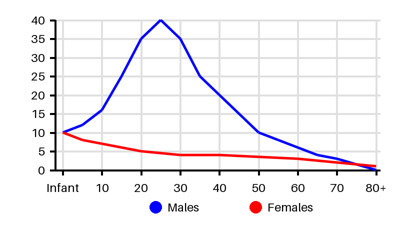
Incidence per 100.000 [ttw][rvn][om1][5en]
Symptoms & findings
Symptoms
Amnesia, Anisocoria, Anopsia, Anorexia, Apathy, Aphasia, Ataxia, Bradycardia, Cheyne-Stokes respiration, Coma, Confusion, Cushing's triad, Decreased consciousness, Diplopia, Dizziness, Drowsiness, Fecal incontinence, Headache, Hypertension, Irregular respiration, Lethargy, Myalgia, Nausea, Paresis, Paresthesia, Respiratory failure, Seizure, Unconsciousness, Urinary incontinence, Vomiting, Weakness, Wide pulse pressure
Clinical findings
Decreased Blood Urea Nitrogen, Decreased Uric Acid, Elevated Intracranial Pressure, Hyponatremia, Hyposmolality
Anamneses
Localized findings
Approach
Ophtalmoscopy
CT caput
MR caput
Lumbar puncture
Treatment
Reduce elevated intracranial pressure: [om1][ttw][th7]
Head elevation
Hyperventilation
Osmotic diuresis (mannitol or hypertonic saline i.v.)
Craniotomy and hematoma evacuation
Correction of coagulopathy:
Massive transfusion protocol: packed rRBC, fresh frozen plasma, and platelets
Tailored reversal of the anticoagulant (vitamin K, Protamine) or antiplatelet agents
Surgery: Craniotomy + hematoma evacuation + ligation of the bleeding vessel
Focal signs or symptoms
Glasgow Coma Scale score <9
Large hematoma volume (>30 cm3 or >30 mL)
Hematoma growth causing elevated intracranial pressure or symptoms
Non-operative conservative management with serial CT scanning is attempted if the patient satisfies all of the following criteria and has mild symptoms:
Glasgow Coma Scale score > 8
No focal neurological symptoms
Epidural hematoma volume of less than 30 mL
A clot diameter of less than 15 mm
Midline shift of less than 5 mm
Differential diagnoses
Arteriovenous malformation, Brain abscess, Brain tumor, Cerebral aneurysm, Hydrocephalus, Intracerebral hemorrhage, Multiple sclerosis, Stroke, Subarachnoid hemorrhage, Subdural hematoma, Toxoplasmosis
References
[1] Khairat A, Margetis K, Waseem M. Epidural Hematoma. [Updated 2025 Jul 7]. In: StatPearls [Internet]. Treasure Island (FL): StatPearls Publishing; 2025 Jan-. Available from: https://www.ncbi.nlm.nih.gov/books/NBK518982/
[2] https://www.uptodate.com/contents/intracranial-epidural-hematoma-in-adults
[3] Talbott JF, Gean A, Yuh EL, Stiver SI. Calvarial fracture patterns on CT imaging predict risk of a delayed epidural hematoma following decompressive craniectomy for traumatic brain injury. AJNR Am J Neuroradiol. 2014 Oct;35(10):1930-5.
[4] Rahimi A, Corley JA, Ammar A, Shlobin NA, Rolle M, Mekary RA, Park KB. The unmet global burden of cranial epidural hematomas: A systematic review and meta-analysis. Clin Neurol Neurosurg. 2022 Aug;219:107313.
[5] Bullock MR, Chesnut R, Ghajar J, Gordon D, Hartl R, Newell DW, Servadei F, Walters BC, Wilberger JE; Surgical Management of Traumatic Brain Injury Author Group. Surgical management of acute epidural hematomas. Neurosurgery. 2006 Mar;58(3 Suppl):S7-15. PMID: 16710967.
[6] El-Menyar A, Mekkodathil A, Verma V, Wahlen BM, Peralta R, Taha I, Hakim S, Al-Thani H. Gender Discrepancy in Patients with Traumatic Brain Injury: A Retrospective Study from a Level 1 Trauma Center. Biomed Res Int. 2022 Aug 18;2022:3147340.
[7] El-Menyar A, Mekkodathil A, Al-Thani H, Consunji R, Latifi R. Incidence, Demographics, and Outcome of Traumatic Brain Injury in The Middle East: A Systematic Review. World Neurosurg. 2017 Nov;107:6-21.
[8] Irie F, Le Brocque R, Kenardy J, Bellamy N, Tetsworth K, Pollard C. Epidemiology of traumatic epidural hematoma in young age. J Trauma. 2011 Oct;71(4):847-53.