Diagnosis
Syndrome of inappropriate antidiuretic hormone secretion
Unsuppressed release of antidiuretic hormone (ADH) from the pituitary gland or nonpituitary sources resulting in impaired water excretion, excess of water, hyponatremia and hyposmolality.
Also known as: SIADH
Etiology
Cause [7hx][v1y][7hx]
Drug side effects: Acetylcholine, antidepressants (SSRI), antiepileptics (carbamazepine), antipsychotics (oxcarbazepine, chlorpropamide), chemotherapy (vincristine, cyclophosphamide, cisplatin), ACE-inhibitors, nicotine, opiates, NSAIDs, desmopressin, oxytocin, delirium tremens, ecstasy, interferons, methotrexate, ciprofloxacin, haloperidol, and high dose imatinib
Surgery/physical stress: trauma, surgery, mechanical ventilator
Malignancy/paraneoplasia: Lung, colorectal, pancreas, gastric, bladder, prostate, ovarian, lymphoma, leukemia, brain, breast, melanoma, thymoma
CNS: lupus, stroke, hydrocephalus, subarachnoid hemorrhage, subdural hematoma, epilepsy, multiple sclerosis, cavernous sinus thrombosis, encephalitis, meningitis, brain abscess, psychosis, acute intermittent porphyria, delirium tremens, Guillain-Barré syndrome, head trauma, hydrocephalus
Pulmonary disease: Asthma, Atelectasis, Acute respiratory failure, pneumonia, COPD, Emphysema, Empyema, Pneumothorax, Sarcoidosis, tuberculosis, Cystic fibrosis
Hormone: Hypopituitarism, hypothyroidism, vasopressin, desmopressin, oxytocin
Other: HIC, porphyria, HIV
Pathophysiology [7hx]
ADH (vasopressin) is produced in the hypothalamus and released in a response to hyperosmolality and circulating volume depletion
ADH causes water reabsorption in the tubuli:
Osmoregulation: maintain the plasma tonicity
Volume Regulation: water absorption from the kidneys
In SIADH, hyponatremia is a result of an excess of water and not a deficiency of Na
Slowly progressive hyponatremia is associated with fewer symptoms than is a rapid drop of serum-Na
Clinical manifestation:
Hyponatremia
Cerebral edema
Nausea and malaise
CNS: concentration, headache, lethargy, obtundation, seizure, coma
Complications [v1y]
Headaches
Memory problems
Depression
Tremors
Muscle cramps
Respiratory failure
Seizure
Hallucinations
Coma
Death
Epidemiology
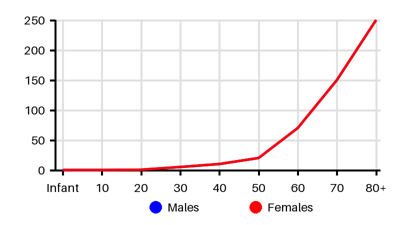
Incidence per 100.000 [v1y][qqv][sns][wfp][ush]
Symptoms & findings
Symptoms
Anorexia, Asterixis, Ataxia, Cheyne-Stokes respiration, Coma, Confusion, Delirium, Dysarthria, Headache, Hyporeflexia, Lethargy, Malaise, Muscle cramps, Muscle weakness, Myalgia, Nausea, Respiratory failure, Seizure, Thirst, Tremor, Weakness
Clinical findings
Cerebral edema, Decreased Blood Urea Nitrogen, Decreased Uric Acid, Elevated Urine Osmolality, Hyponatremia, Hyposmolality, Natriuresis
Anamneses
Localized findings
Approach
Blood tests: Serum/plasma osmolality, electrolytes (Na, K, Cl, bicarbonate), creatinine, thyroid profile, serum cortisol, fasting lipid profile, liver function tests, glucose, uric acid
Urine osmolality
Chest x-ray
CT caput
Clinical presentation [ioc]
Plasma hypoosmolarity with similar hyponatremia
Plasma osmolarity higher than urinary osmolarity
Excessive renal excretion of sodium
Clinical absence of factors causing edema or volume depletion
Normal renal and adrenal function
Diagnostic criteria [m6a][7hx]
Hyponatremia (Na < 135 mmol/L)
Plasma hypo-osmolality < 280 mOsm/kg
High urine osmolality > 100 mOsm/kg
Elevated urinary sodium excretion > 30 mEq/L
Euvolemic without fluid overload or dehydration
Normal salt and water intake
Low serum uric acid levels < 4 mg/dL
Low blood urea nitrogen < 10 mg/dL
Treatment
Correction of sodium levels to > 130 mEq/L [v1y]
Rate of correction to avoid central pontine myelinolysis: 8 mEq/L per 24 hours or 0.5 to 1 mEq/L per hour
Water intake restriction < 800 mL/day
Sodium chloride salt tablets
IV hypertonic saline (3%): 100 mL bolus in the first 3 to 4 hours -> repeat?
Loop diuretics (furosemide 20 mg twice daily) if urine osmolality > 500 mOsm/kg
Vasopressin receptor antagonists: conivaptan (IV) or tolvaptan (oral)
Dialysis?
Other therapies (last resort due to nephrotoxicity): lithium or demeclocycline
Correction of underlying abnormalities (hypothyroidism, pneumonia, CNS infection
Differential diagnoses
Acute liver failure, Adrenal insufficiency, Cirrhosis, Diabetic ketoacidosis, Diarrhea, Drug side effects, Heart failure, Hypervolemia, Hyponatremia, Hypothyroidism, Hypovolemia, Nephrotic syndrome, Portal hypertension, Renal failure
References
[1] http://emedicine.medscape.com/article/246650 (2014-01-02); [Medscape]
[2] Yasir M, Mechanic OJ. Syndrome of Inappropriate Antidiuretic Hormone Secretion. Updated 2023 Mar 6: https://www.ncbi.nlm.nih.gov/books/NBK507777/
[3] Anpalahan M. Chronic idiopathic hyponatremia in older people due to syndrome of inappropriate antidiuretic hormone secretion (SIADH) possibly related to aging. J Am Geriatr Soc. 2001 Jun;49(6):788-92.
[4] Filippatos TD, Makri A, Elisaf MS, Liamis G. Hyponatremia in the elderly: challenges and solutions. Clin Interv Aging. 2017 Nov 14;12:1957-1965.
[5] O'Donoghue D, Trehan A. SIADH and hyponatraemia: foreword. NDT Plus. 2009 Nov;2(Suppl_3):iii1-iii4.
[6] Hawkins RC. Age and gender as risk factors for hyponatremia and hypernatremia. Clin Chim Acta. 2003 Nov;337(1-2):169-72.
[7] Bartter FC, Schwartz WB. The syndrome of inappropriate secretion of antidiuretic hormone. Am J Med. 1967 May;42(5):790-806.
[8] Tran V, Flores J, Sheldon M, Pena C, Nugent K. Fluid and Electrolyte Disorders in Traumatic Brain Injury: Clinical Implications and Management Strategies. J Clin Med. 2025 Jan 24;14(3):756.