Diagnosis
Alcoholic liver disease
Liver injury associated with long-term heavy intake of ethanol. Alcohol-related liver manifestations:
Fatty liver disease
Alcoholic hepatitis
Liver fibrosis
Cirrhosis
Also known as: Alcoholic cirrhosis, Alcoholic fatty liver, Alcoholic hepatitis, Alcoholic steatosis
Etiology
Pathophysiology
The precise mechanism of alcoholic liver disease remains in dispute: [kfz]
Metabolism of alcohol through alcohol dehydrogenase --> acetaldehyde --> acetate
Acetaldehyde is a reactive metabolite that can produce injury:
Genetic factors
Protein-energy malnutrition
Toxic effects on hepatocyte cell membranes and mitochondrial membranes
Hypermetabolic state of the hepatocyte --> hypoxic damage
Free radicals and oxidative injury
Steatosis (accumulation of fat in the hepatocytes)
Autoimmune factors
The relative risk of cirrhosis rises significantly for alcohol intake above 60 g/day for men and 20 g/day for women over a decade [dfu][9oc][dir]. 1 beverage = 14 grams of alcohol. With continued heavy alcohol consumption, the alcoholic liver disease progress from fatty liver (steatosis) --> hepatitis --> cirrhosis. [nd8]
Alcoholic Fatty Liver (steatosis):
~20% of alcoholics and heavy drinkers
Usually no clinical symptoms except for hepatomegaly
Fatty liver can be reversed if alcohol consumption is stopped
Alcoholic Hepatitis
Liver biopsy indicates inflammatory changes, liver degeneration, fibrosis
Clinical signs: hepatomegaly, nausea, vomiting, abdominal pain, fever, jaundice
If heavy drinking continues, ~40% of cases of alcoholic hepatitis --> cirrhosis
Alcoholic Cirrhosis
~10-15% with alcoholism develop cirrhosis
The most serious form of ALD
Scar tissue replaces normal liver tissue, disrupting blood flow through the liver and preventing it from working properly
Clinical signs: palmar erythema, finger contractures, white nails, nails clubbing, hepatomegaly, inflammation, steatosis, jaundice, ascites, or gastrointestinal bleeding
The survival rate is only 60 percent for those who stop drinking and 35 percent for those who do not
Epidemiology
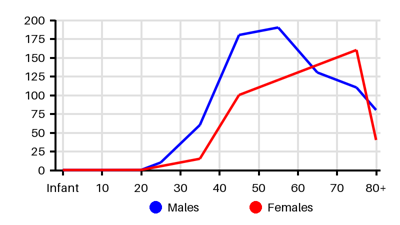
Incidence per 100.000 [dir][ton][dsy][yno][d79][ays][ofq][nd8]
Symptoms & findings
Symptoms
Anorexia, Asterixis, Confusion, Dark urine, Delirium, Edema, Fatigue, Fever, Hematemesis, Hematochezia, Hepatomegaly, Lethargy, Malaise, Melena, Muscle atrophy, Nausea, Spider nevus, Splenomegaly, Tachycardia, Tachypnea, Tremor, Weight loss
Clinical findings
Alkalosis, Ascites, Decreased Albumin, Elevated ALAT, Elevated ALP, Elevated ASAT, Elevated Bilirubin, Elevated GGT, Elevated PT-INR, Gynecomastia, Jaundice, Leukocytosis, Thrombocytopenia
Anamneses
Localized findings
Approach
Blood test: ASAT, ALAT, ALP, GGT, PT-INR, Bilirubin, ferritin, transferrin, CRP, AFP, carbohydrate-deficient transferrin
Viral antigens
Ultrasound
Liver biopsy (percutaneous or transjugular)
Upper endoscopy to screen for esophageal varices
Model for end-stage liver disease (MELD) score is useful in predicting the 30- and 90-day mortality in patients with alcoholic hepatitis
Treatment
Alcohol abstinence is the single most important determinant of long-term patient survival
Treatment of complications: [kfz]
Nutritional supplementation: vitamins and minerals, including folate and thiamine
Variceal hemorrhage: Protection of the airway, resuscitation, interventional endoscopy (sclerotherapy or banding ligation), infusion of portal antihypertensive (somatostatin), balloon tamponade, transjugular intrahepatic portosystemic shunt, or an emergency portal-caval shunt
Hepatic encephalopathy: Lactulose or nonabsorbable antibiotics, ammonium, intracranial pressure monitoring
Ascites: Salt restriction, diuretics, paracentesis, and intravenous albumin supplementation
Spontaneous bacterial peritonitis: diagnostic paracentesis --> broad-spectrum antibiotic therapy (cephalosporin)
Alcoholic hepatitis: Corticosteroid (prednisolone 40 mg/d) is recommended as the first-line treatment of severe AH patients
Cirrhosis: Liver transplantation (required a minimum 6-month abstinence)
Differential diagnoses
Autoimmune hepatitis, Chronic pancreatitis, Drug-induced liver injury, Hemochromatosis, Nonalcoholic fatty liver disease, Viral hepatitis
References
[1] https://emedicine.medscape.com/article/170539
[2] Testino G, Leone S, Fagoonee S, Pellicano R. Alcoholic liver fibrosis: detection and treatment. Minerva Med. 2018 Dec;109(6):457-471.
[3] Bellentani S, Tiribelli C. The spectrum of liver disease in the general population: lesson from the Dionysos study. J Hepatol. 2001 Oct;35(4):531-7.
[4] Becker U, Deis A, Sørensen TI, Grønbaek M, Borch-Johnsen K, Müller CF, Schnohr P, Jensen G. Prediction of risk of liver disease by alcohol intake, sex, and age: a prospective population study. Hepatology. 1996 May;23(5):1025-9.
[5] Mann RE, Smart RG, Govoni R. The epidemiology of alcoholic liver disease. Alcohol Res Health. 2003;27(3):209-19.
[6] Rattanamongkolgul S, Wongjitrat C, Puapankitcharoen P. Prevalence of cirrhosis registered in Nakhon Nayok, Thailand. J Med Assoc Thai. 2010 Feb;93 Suppl 2:S87-91.
[7] Kim, H.I., Park, S.Y. & Shin, H.P. Incidence and management patterns of alcohol-related liver disease in Korea: a nationwide standard cohort study. Sci Rep 11, 6648 (2021).
[8] Han S, Yang Z, Zhang T, Ma J, Chandler K, Liangpunsakul S. Epidemiology of Alcohol-Associated Liver Disease. Clin Liver Dis. 2021 Aug;25(3):483-492.
[9] Huang, D.Q., Mathurin, P., Cortez-Pinto, H. et al. Global epidemiology of alcohol-associated cirrhosis and HCC: trends, projections and risk factors. Nat Rev Gastroenterol Hepatol 20, 37–49 (2023).
[10] Fleming KM, Aithal GP, Solaymani-Dodaran M, Card TR, West J. Incidence and prevalence of cirrhosis in the United Kingdom, 1992-2001: a general population-based study. J Hepatol. 2008 Nov;49(5):732-8.
[11] Wu, M., Qin, S., Tan, C. et al. Estimated projection of incidence and mortality of alcohol-related liver disease in China from 2022 to 2040: a modeling study. BMC Med 21, 277 (2023).