Diagnosis → Infectious Disease
Dengue fever
A mosquito-borne infectious tropical disease caused by the dengue virus.
Also known as: Breakbone fever, Dandy fever
Etiology
Cause [qfu]
Dengue virus is a single-stranded RNA Flavivirus within the family Flaviviridae
Transmitted via mosquito bite of infected female Aedes aegypti and Aedes albopictus
Very rare incidence of perinatal transmission, blood transfusion, organ transplantation, and sexual transmission
Incubation period: 4-10 days
Pathophysiology [qfu]
Following a mosquito bite --> inoculation into the skin
Infects local immune cells (dendritic cells, macrophages, mast cells)
Lymphatic system --> regional lymph nodes --> bloodstream --> systemic viremia
Immune response:
Innate: interferon and natural killer cell activation
Adaptive: Dengue-specific B and T lymphocytes + neutralizing antibodies
Clinical presentation:
Asymtomatic
Mild flu-like symptoms: fever, headache, myalgia, arthralgia, rash
Severe disease characterized by:
Profound capillary permeability due to cytokine release
Hemorrhagic shock
Organ failure:
Bone marrow suppression: leukopenia and thrombocytopenia
Liver injury: Hepatitis, liver failure
Cardiac injury: myocarditis, pericarditis, pericardial effusion, arrhythmia
Neurologic involvement: encephalopathy, encephalitis, meningitis, cerebral hemorrhage, infarction, or ischemic stroke
Respiratory distress
Kidney failure
Recovery phase
Reabsorption of extravasated fluid and clinical improvement
Complications [qfu]
Severe plasma leakage --> hypovolemic shock
Coagulopathy --> bleeding: gastrointestinal, mucosal, or vaginal hemorrhage
Organ failure: liver failure, myocarditis, encephalitis, kidney injury, respiratory failure, bone marrow suppression
Neurologic complications: encephalitis, meningitis, Guillain-Barré syndrome and acute disseminated encephalomyelitis
Sight-threatening ophthalmic inflammation
Perinatal complications: maternal complications, fetal loss, and neonatal death
Risk factors [qfu]
Environmental factors: Humidity, temperatures between 25°C and 30°C
Prior dengue infection
Extremes of age (children and older adults)
Pregnancy
Comorbidities (diabetes, hypertension, renal or cardiovascular disease)
Epidemiology
Incidence per 100.000 [qfu][q12][uc3][eyu][bwi][z9o][pbq]
Default, Northern America, Central Asia, Eastern Europe, Northern Europe, Southern Europe, Western Europe
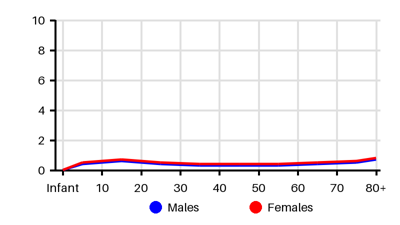
Incidence per 100.000 [qfu][q12][uc3][eyu][bwi][z9o][pbq]
South America
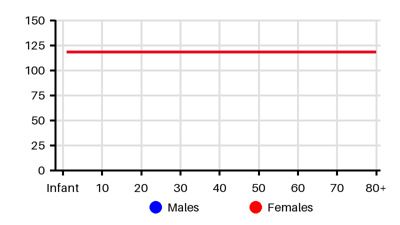
Incidence per 100.000 [qfu][q12][uc3][eyu][bwi][z9o][pbq]
Central America
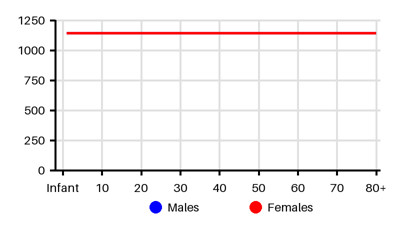
Incidence per 100.000 [qfu][q12][uc3][eyu][bwi][z9o][pbq]
Caribbean
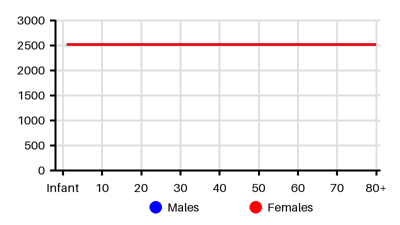
Incidence per 100.000 [qfu][q12][uc3][eyu][bwi][z9o][pbq]
Western Africa
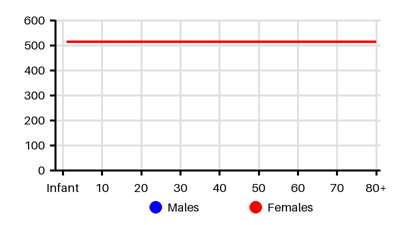
Incidence per 100.000 [qfu][q12][uc3][eyu][bwi][z9o][pbq]
Middle Africa
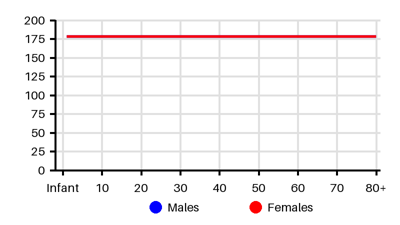
Incidence per 100.000 [qfu][q12][uc3][eyu][bwi][z9o][pbq]
Eastern Africa
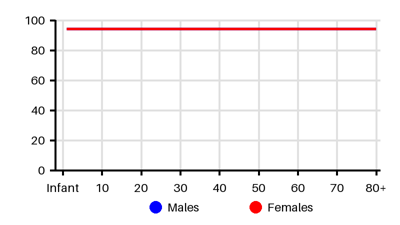
Incidence per 100.000 [qfu][q12][uc3][eyu][bwi][z9o][pbq]
Southern Africa
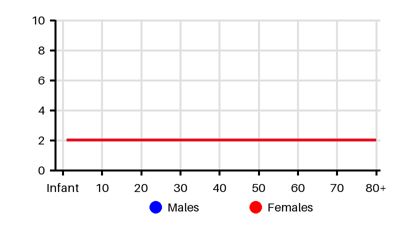
Incidence per 100.000 [qfu][q12][uc3][eyu][bwi][z9o][pbq]
Northern Africa
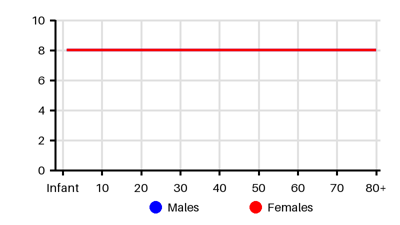
Incidence per 100.000 [qfu][q12][uc3][eyu][bwi][z9o][pbq]
Eastern Asia
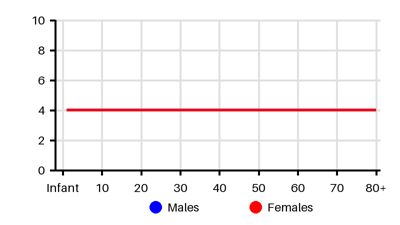
Incidence per 100.000 [qfu][q12][uc3][eyu][bwi][z9o][pbq]
Southern Asia
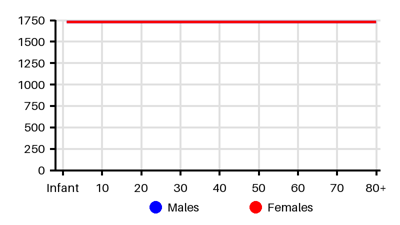
Incidence per 100.000 [qfu][q12][uc3][eyu][bwi][z9o][pbq]
South-eastern Asia
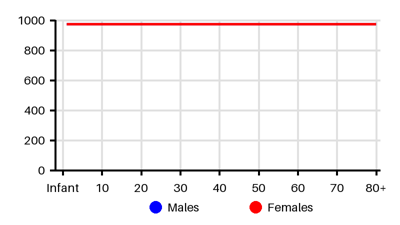
Incidence per 100.000 [qfu][q12][uc3][eyu][bwi][z9o][pbq]
Western Asia
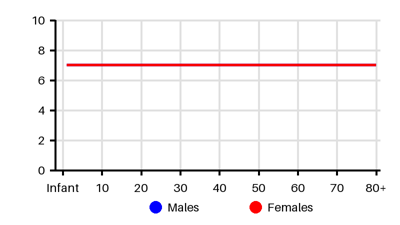
Incidence per 100.000 [qfu][q12][uc3][eyu][bwi][z9o][pbq]
Australia and New Zealand
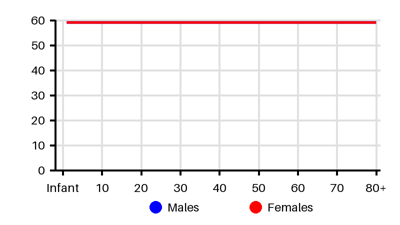
Incidence per 100.000 [qfu][q12][uc3][eyu][bwi][z9o][pbq]
Melanesia, Micronesia, Polynesia
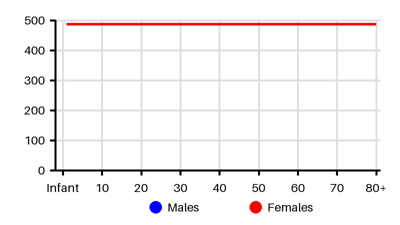
Symptoms & findings
Symptoms
Anorexia, Arrhythmia, Arthralgia, Confusion, Decreased consciousness, Diarrhea, Epistaxis, Fatigue, Fever, Headache, Hepatomegaly, Hypotension, Lethargy, Lymphadenopathy, Myalgia, Narrow pulse pressure, Nausea, Oliguria, Prolonged capillary refill, Restlessness, Seizure, Tachycardia, Vomiting
Clinical findings
Ascites, Coagulopathy, Conjunctival injection, Elevated ALAT, Elevated ASAT, Elevated Hematocrit, Elevated PT-INR, Elevated Troponin, Leukopenia, Pericardial effusion, Pleural effusion, Shock, ST depression, ST elevation, Thrombocytopenia
Anamneses
None listed.
Localized findings
Approach
Laboratory tests: complete blood count, platelet count, hematocrit, liver enzymes, aPTT, PT-INR [qfu]
PCR (typically positive during the first 5 days
Serology:
Antigen testing (typically positive during the first 4 to 7 days)
Dengue IgM from day 4 after symptoms
The tourniquet test reflects capillary fragility:
> 10 petechiae per 2.5 cm (1 inch) square after maintaining cuff pressure midway between systolic and diastolic pressures for 5 minutes
Imaging if complications:
Ultrasonography of the chest and abdomen
Chest x-ray
CT caput
Treatment
Profylaxis: Minimize exposure to infected Aedes mosquitoes [qfu]
Avoiding travel to endemic areas
Insect repellents
Clothing: wearing long-sleeved clothing and long pants
Bed nets
Mosquito-repellent coils
Remove standing water from containers (reservoirs)
Chemical control: insecticide
Vaccine: Dengvaxia
Treatment depends on severity: [qfu]
Dengue without warning signs (outpatient management)
Dengue with warning signs or comorbidity:
Abdominal pain, persistent vomiting, mucosal bleeding, lethargy, restlessness, fluid accumulation, hepatomegaly, rising hematocrit, thrombocytopenia
Severe dengue
The triphasic clinical course:
Febrile
Critical/plasma-leakage
Recovery phase
No antiviral therapy is currently available
Supportive treatment:
Oral or IV hydration is the cornerstone of dengue management
Antipyresis
Acetaminophen
Monitoring vital status and urine output
Blood transfusion if hemorrhagic bleeding:
Gastrointestinal bleeding
Severe epistaxis
Heavy menstrual bleeding
Organ failure:
Coagulopathy --> vitamin K
Heart failure --> vasopressors
Respiratory failure --> ventilatory support
Kidney failure --> renal replacement therapy
Differential diagnoses
Adenovirus, Chikungunya, COVID-19, Crimean-Congo hemorrhagic fever, Ebola virus, Hantavirus, Herpes simplex, HIV, Influenza, Japanese encephalitis, Lassa fever, Leptospirosis, Malaria, Marburg virus disease, Measles, Mononucleosis, Rickettsia, Rubella, Sepsis, Tuberculosis, Typhoid fever, Viral hepatitis, West Nile virus, Yellow fever, Zika
References
[1] Pescador Ruschel MA, Panda PK, Farmer A. Dengue Fever. [Updated 2026 Mar 29]. In: StatPearls [Internet]. Treasure Island (FL): StatPearls Publishing; 2026 Jan-. Available from: https://www.ncbi.nlm.nih.gov/books/NBK430732/
[2] Zheng, J., Tong, H., Chen, M. et al. Global burden of dengue from 1990 to 2021: a systematic analysis from the Global Burden of Disease study 2021. Infect Dis Poverty 14, 105 (2025).
[3] Xia H, Dong X. The global, regional, and national burden trends of dengue among adults aged 20-49 from 1990 to 2021. Sci Rep. 2025 Jul 23;15(1):26761.
[4] Velayutham R, Kalra S, Yadav S, Dadhich A, Sharma PC, Yadav S, Mittal P, Kukreti A, Ajmera P, Ajmera P, Miraj M, Shaik RA, Al-Maamari A. Trends in dengue incidence and disease burden in South Asia with special reference to India: Insights from the global burden of disease data, 1990-2021. J Infect Public Health. 2026 Apr;19(4):103142.
[5] Tian N, Zheng JX, Guo ZY, Li LH, Xia S, Lv S, Zhou XN. Dengue Incidence Trends and Its Burden in Major Endemic Regions from 1990 to 2019. Trop Med Infect Dis. 2022 Aug 12;7(8):180.
[6] Zeng Z, Zhan J, Chen L, Chen H, Cheng S. Global, regional, and national dengue burden from 1990 to 2017: A systematic analysis based on the global burden of disease study 2017. EClinicalMedicine. 2021 Jan 6;32:100712.
[7] Deng J, Zhang H, Wang Y, Liu Q, Du M, Yan W, Qin C, Zhang S, Chen W, Zhou L, Liu M, Niu B, Liu J. Global, regional, and national burden of dengue infection in children and adolescents: an analysis of the Global Burden of Disease Study 2021. EClinicalMedicine. 2024 Nov 19;78:102943.