Diagnosis
Anemia
A decrease in red blood cell mass leading to reduction in hemoglobin, hematocrit or RBC count:
Male: Hb < 13.5
Female: Hb < 12
Childre: Hb < 11
NB! Hemoglobin is a concentration --> affected by changes in plasma volume.
Etiology
Etiology of decreased production [2kz]
Hypoproliferative Microcytic Anemia (corrected reticulocyte <2%, MCV<80)
Iron deficiency anemia / Malnutrition
Anemia of chronic disease (inflammatory inhibition through cytokines)
Sideroblastic anemia
Thalassemia
Lead poisoning
Hypoproliferative Normocytic Anemia (corrected reticulocyte <2%, MCV 80-100)
Anemia of chronic disease (inflammatory inhibition through cytokines)
Renal failure (low on EPO stimuli)
Bone marrow failure (Leukemia, Lymphoma, Myelofibrosis, Myelodysplasia, Aplasia)
Pure red cell aplasia
Myelofibrosis or myelophthisic processes
Multiple myeloma
Hypoproliferative Macrocytic Anemia (corrected reticulocyte <2%, MCV>100)
Alcohol
Liver disease
Hypothyroidism (low on thyroxin stimuli)
Folate and Vitamin B12 deficiency
Myelodysplastic syndrome
Drug-induced
Diuretics
Chemotherapeutic agents
Hypoglycemic agents
Antiretroviral agents
Antimicrobials
Anticonvulsants
Etiology of hemolytic anemia [2kz]
reticulocyte count is > 2%, elevated LD, decreased haptoglobin
Extravascular hemolysis: RBC prematurely destroyed by the liver and spleen
Hemoglobinopathies (sickle cell, thalassemia)
Enzyemopathies (G6PD deficiency, pyruvate kinase deficiency)
Membrane defects (hereditary spherocytosis, hereditary elliptocytosis)
Drug-induced
Intravascular hemolysis: red cells lyse within the circulation, and is less common.
Paroxysmal nocturnal hemoglobinuri
Autoimmune hemolytic anemia (idiopatic, lymphoma, SLE, infection, drugs, transfusion -> Coombs test)
Transfusion reactions
Microangiopathic hemolytic anemia
Disseminated Intravascular Coagulation
Infections
Snake bites/venom
Physical etiologies
Traumatic hemorrhage
Burns
Frostbite
Prosthetic valves and surfaces
Pregnancy
Infectious etiologies
Viral - Hepatitis, Mononucleosis, cytomegalovirus
Bacterial - Clostridia, gram-negative sepsis
Protozoal - Malaria, leishmaniasis, toxoplasmosis, hookworm (GI loss), schistosomiasis (urinary loss)
Genetic etiologies
Hemoglobinopathies (Sickle cell anemia, Thalassemia -> decreased MCV/ferritin)
Enzyme abnormalities (Glucose-6-ph Dehydrogenase, Pyruvate kinase, Paroxysmal nocturnal hemoglobinuri)
Defects of the RBC cytoskeleton Sspherocytosis)
Congenital dyserythropoietic anemia
Rh null disease
Hereditary xerocytosis
Abetalipoproteinemia
Fanconi anemia
Pathophysiology
Decrease in intravascular volume -> hypovolemia -> hypotension -> baroreceptor in carotid bulb -> sympathetic stimuli -> adrenaline/ADH/renin/angiotensin -> tachycardia, increased cardiac stroke volume, vasoconstriction and decreased urine output
Epidemiology
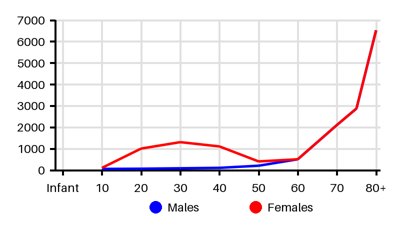
Incidence per 100.000 [4ce]
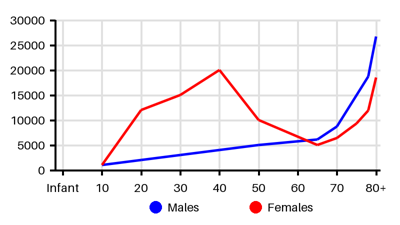
Prevalence per 100.000 [4ce]
Symptoms & findings
Symptoms
Caput medusa, Cheilitis, Claudication, Cold skin, Cyanosis, Dark urine, Dizziness, Dyspnea, Edema, Glossitis, Hepatomegaly, Hypotension, Icterus, Lethargy, Lymphadenopathy, Muscle cramps, Pallor, Photopsia, Scotoma, Spider nevus, Splenomegaly, Syncope, Tachycardia, Tachypnea, Tinnitus, Visual disturbances, Weakness
Clinical findings
Anemia, Decreased Ferritin, Decreased Haptoglobin, Decreased MCV, Elevated Bilirubin, Elevated Lactic Dehydrogenase, Elevated MCV, Hemoglobinuria, Hypoxemia, Jaundice, Koilonychia, Reticulocytosis, Shock
Anamneses
Approach
Blood test: MCV, Ferritin, B12, Folic acid, Lactic dehydrogenase, Haptoglobin [2kz]
Corrected reticulocyte count = percent reticulocytes x (patient's HCT/normal HCT)
If > 2: hemolysis or acute blood loss
If < 2: hypoproliferation
MCV:
MCV <80
MCV 90-100
MCV >100
Other tests based on reticulocytes and MCV:
Hemofec
Urine stix: hematuria
Coombs test
Blood smear
Coloscopy in elders
Treatment
Acute treatment of anemia:
IV fluids, crossmatched blood transfusions, oxygen
Maintain hemoglobin > 7 g/dL (> 8 g/dL if cardiovascular disease)
Treatment of the underlying cause
Nutritional deficiencies: Oral/IV iron, B12, and folate
Chronic disease
Hemolytic anemia: mechanical valve replacement, discontinue medication, splenectomy, exchange transfusions (hemoglobinopathies), antifibrinolytic agents (DIC)
Differential diagnoses
Aplastic anemia, Colorectal cancer, Folic acid deficiency, Hemolytic anemia, Hypothyroidism, Hypovolemia, Paroxysmal nocturnal hemoglobinuria, Shock, Sickle cell disease, Systemic lupus erythematosus, Thalassemia, Vitamin B12 deficiency
References
[1] Turner J, Parsi M, Badireddy M. Anemia. [Updated 2023 Aug 8]. In: StatPearls [Internet]. Treasure Island (FL): StatPearls Publishing; 2025 Jan-. Available from: https://www.ncbi.nlm.nih.gov/books/NBK499994/
[2] Levi et al. Epidemiology of iron deficiency anaemia in four European countries: a population-based study in primary care. Eur J Haematol. 2016 Dec;97(6):583-593.
[3] http://emedicine.medscape.com/article/198475 (2014-02-05); [Medscape]
[4] Tettamanti et al. Prevalence, incidence and types of mild anemia in the elderly: the "Health and Anemia" population-based study. Haematologica. 2010 Nov;95(11):1849-56.
[5] Stauder R, Thein SL. Anemia in the elderly: clinical implications and new therapeutic concepts. Haematologica. 2014 Jul;99(7):1127-30. doi: 10.3324/haematol.2014.109967.
[6] Akbarpour et al. Anemia prevalence, severity, types, and correlates among adult women and men in a multiethnic Iranian population: the Khuzestan Comprehensive Health Study (KCHS). BMC Public Health. 2022 Jan 25;22(1):168