Diagnosis
Rectus sheath hematoma
Usually a self-limiting bleeding into the rectus sheath from damage to the epigastric arteries or from a direct tear of the rectus muscle.
Also known as: Rectus hematoma
Etiology
Cause [qju][fii]
External trauma to the abdominal wall
Surgery
Anticoagulation
Strong rectus muscle contraction (valsalva, coughing, vomiting, or constipation)
Pregnancy
Pathophysiology [ecs]
The blood supply to the rectus abdominis muscles originates from the superior and inferior epigastric arteries
The inferior epigastric artery:
Lacks the protection of a posterior rectus sheath until it reaches the arcuate line
Subjected to relative movement from muscle contractions along its pathway
Injury to an epigastric artery or its perforating branches within the rectus muscle
Bleeding into the enveloping fascial sheath
Increases the pressure in the rectus compartment:
Pain
Anemia
Risk factors
Trauma, surgery, anticoagulation, pregnancy, chronic kidney disease, steroid/immunosuppressive therapy
Epidemiology
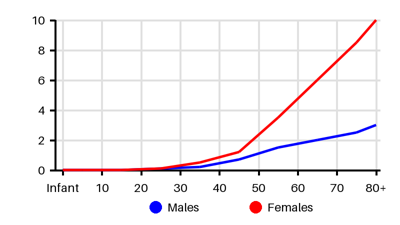
Incidence per 100.000 [wa9][qju][7ia][sam][fii][fit]
Symptoms & findings
Symptoms
Anorexia, Carnett's sign, Chills, Confusion, Constipation, Cullen's sign, Diaphoresis, Diarrhea, Fever, Fothergill's sign, Hyperesthesia, Hypoactive bowel sounds, Hypotension, Nausea, Pallor, Tachycardia, Tachypnea, Tenesmus, Vomiting, Weakness
Clinical findings
Anemia, Decreased hematocrit, Elevated Creatine Kinase, Leukocytosis
Anamneses
Anticoagulation, Surgery, Trauma
Localized findings
Approach
Blood test: PT-INR, APTT [fii]
Blood gas
Pelvic exam
Ultrasound abdomen
CT abdomen
MRI
Treatment
Conservative treatment with observation: [tyk][7ia][fii][fit]
Hemodynamic monitoring
Intravenous fluids
Blood transfusion
Analgesia
Rest
Reversal of anticoagulation
Endovascular coil embolisation [pzb]
Surgery: Rarely needed
Fasciotomy
Evacuation of hematoma
Hemostasis
Differential diagnoses
Abdominal aortic aneurysm, Abdominal compartment syndrome, Abruptio placentae, Acute mesenteric ischemia, Acute pancreatitis, Aortic dissection, Appendicitis, Cholecystitis, Cholelithiasis, Diverticulitis, Femoral hernia, Gastritis, Gastroenteritis, Gastrointestinal obstruction, Incisional hernia, Inguinal hernia, Intussusception, Ovarian torsion, Ruptured aortic aneurysm, Ruptured ectopic pregnancy, Ruptured ovarian cyst, Ulcer disease, Umbillical hernia, Urinary retention, Urinary tract infection
References
[1] http://reference.medscape.com/article/776871 (2014-01-02); [Medscape]
[2] Hatjipetrou A, Anyfantakis D, Kastanakis M. Rectus sheath hematoma: a review of the literature. Int J Surg. 2015 Jan;13:267-271.
[3] Allen M, Sevensma KE. Rectus Sheath Hematoma. [Updated 2023 Jan 30]. In: StatPearls [Internet]. Treasure Island (FL): StatPearls Publishing; 2025 Jan-. Available from: https://www.ncbi.nlm.nih.gov/books/NBK519033/
[4] Andreassen KH, Olesen TE, Jacobsen PT. Spontant rectushaematom [Spontaneous rectal hematoma]. Ugeskr Laeger. 1996 Apr 15;158(16):2254-7.
[5] Klingler PJ, Wetscher G, Glaser K, Tschmelitsch J, Schmid T, Hinder RA. The use of ultrasound to differentiate rectus sheath hematoma from other acute abdominal disorders. Surg Endosc. 1999 Nov;13(11):1129-34.
[6] Cherry WB, Mueller PS. Rectus sheath hematoma: review of 126 cases at a single institution. Medicine (Baltimore). 2006 Mar;85(2):105-110.
[7] Fitzgerald JE, Fitzgerald LA, Anderson FE, Acheson AG. The changing nature of rectus sheath haematoma: case series and literature review. Int J Surg. 2009 Apr;7(2):150-4.
[8] Gunasekaran K, Rajasurya V, Devasahayam J, Singh Rahi M, Chandran A, Elango K, Talari G. A Review of the Incidence Diagnosis and Treatment of Spontaneous Hemorrhage in Patients Treated with Direct Oral Anticoagulants. J Clin Med. 2020 Sep 15;9(9):2984.
[9] Spiliopoulos S, Festas G, Theodosis A, Palialexis K, Reppas L, Konstantos C, Brountzos E. Incidence and endovascular treatment of severe spontaneous non-cerebral bleeding: a single-institution experience. Eur Radiol. 2019 Jun;29(6):3296-3307.